Monday, October 5, 2015

A YESTERDAY MANY YEARS PAST


I sit alone reflecting upon a yesterday many years past. A yesterday filled with the possibility of a tomorrow not yet known. A yesterday at a small farm with a man whose protection, guidance, and adoration endured without appreciation from the boy lucky enough to stand beside him. A yesterday with a man I knew not nearly well enough. A man who seemed to have answers even when he did not, and who embraced the responsibility to give and sometimes withhold. With a man I loved and respected and trusted. I sit alone reflecting upon a yesterday hunting doves with my father. 

How little I knew. How little I know. Time proves its fleetness. It condemns me; my wantonness, my selfishness, my sloth, my apathy. It condemns me for allowing it to slip away without a struggle. Even the tomorrow of that yesterday is gone and with it that man I knew not nearly well enough, his body buried on a prairie hill, his tombstone a reminder of time’s unforgiving honesty. 

Caring too long only about my wants and my desires convinced my heart to fear the place my father now rests. But as I sit alone pondering that yesterday I took for granted, it seems I miss the place he now belongs to. It seems fear is but a memory of my own ignorance. An ignorance of love and truth.

That yesterday, the doves flew sparingly and we spent the moment without words or even action. We spent the moment well. And like that man whose body we buried on a prairie hill, that moment lives on. That yesterday of many years past continues to shape today as it whispers of tomorrow’s promise.  

Like a shifting image in the morning cloud, we come and we go, but love, truly understood, lives in eternity. 

So as I sit alone reflecting on that yesterday so long ago, I wait hopeful for the mourning dove, hopeful for the moment that is forever lived well. Hopeful for love, truly understood. 


Dick Cabela October 8, 1936 - February 17, 2014
Happy Birthday, Dad

Friday, September 18, 2015

TRANSFORMATION


And concerning the resurrection of the dead, have you not read what was said to you by God, ‘I am the God of Abraham, the God of Isaac, and the God of Jacob’? He is not the God of the dead but of the living.”
Matthew 22: 31-32

Dew-soaked native grass saturated my boots as well as the bottom half of my pant legs with each step. I passed the small pond, stopping only for a moment to watch a few frogs dive for safety. But the promise of a new hunting season propelled me to slip in and out of the woods with haste. I wanted to check the trail cameras one last time even though I knew the lingering heat of summer would postpone my first bow hunt of the year beyond opening day. Still, the anticipation of autumn’s promises renewed the hope of what I might encounter in the woods.

Halfway to the first camera, while I watched the creek bottom for signs of deer activity, I stepped face-first into a spider web. After spitting and swiping and spinning to free myself of that creepy feeling a web leaves on your face, I chuckled. If a deer had been watching me, I am sure the hilarity of a man dancing with a spider (or the horror of it) would have sent the quadruped bolting for its nearest sanctuary.

After composing myself, I continued along the trail to the camera, which I had strategically placed on the other side of a marshy area requiring me to slosh through ten steps of muck and water. At one point, my boot stuck and I almost tripped into the mud. That is when a pair of white butterflies lifted from an unseen perch and effortlessly fluttered somewhere into the nearby branches where leaves twittered just enough to give the light above them a sparkle like that of a long lost treasure.

Later, after hanging a stand, I thought about the butterflies and the dew and the breeze. I thought about mortality and even questioned what it is my faith tells me about it. In the end, I have to believe in that which I cannot see. That or I do not believe at all. It prompted me to ask a question—a question we all have to face sooner or later. A question we sanitize and do everything we can to avoid.

“What is death?”

I suppose it is healthy that we do not dwell on it, but is it healthy to never question? To never explore why we are her? Ultimately, that is the question. A question we may never know the full answer to in this life. But the butterfly did not bring me to that question. It brought me to the question of death. Not why, but what?

Is it simply the end, as one of my atheist friends believes? Is it a quick ticket to Heaven in some sort of spirit form, but only for believers in Jesus Christ? Or is it a transformation like that of sublimation of H20 or the metamorphosis of a caterpillar or a frog? Or is it something reserved especially for the creature created in the image of God— something more like the Transfiguration. I know what my faith teaches me and I do believe it, but if we never question, how will we ever find the truth? God gave us things He gave no other creature, but He also gave us some of the same qualities of those other creatures. In doing so, maybe He has left us a few tiny clues to what He has planned.  

I am no theologian. But when I see a butterfly, when I see a cloud, when I see a tadpole, I see a process instituted by the ultimate scientist and the ultimate artist—the ultimate Creator.

I walked away from the woods that day with more questions than answers. Maybe it is better that way. God loves us enough to allow us the awe of discovery, the wonder of curiosity, and the beauty of mystery. He loves us enough to let us ask questions and to accept or reject the answers we do or do not find.

The next time I venture into those woods, I will be carrying a bow and will have a different focus. If it is God’s will, a buck will pass below my tree stand. I imagine the questions of death and life and purpose will probably provoke my curiosity once again. Until then, I will try to embrace the day given to me. It is good to seek answers, but true belief and true faith allow us to trust that God knows what He is doing and that whatever we do not fully understand or whatever trials we may encounter do ultimately have a purpose. If believing that allows us to see the glory of God in a butterfly and strengthens our faith, then maybe the mystery and fear of death will transform into the trust and hope which can bring peace to our hearts.

I guess there is only one way I will ever know for sure what death is. And that is okay. I do know I was once mostly dead inside and that God's grace is transforming. I also know when that grace begins to transform, we truly begin to live. 


Thursday, August 13, 2015

CHASING SHADOWS


A shadow of movement zipped across the forest floor. Peter tried to convince himself it was his imagination. He stared at that spot for thirty more seconds. Nothing. He listened. If the turkey had indeed quietly closed the distance as his father said, he might hear it rustling. His father had stopped calling and his quiet stillness seemed impossible for Peter to mimic. The boy tried, but caught himself fidgeting every few minutes. The stern reprimand he expected never came. His father did not make a sound. His father did not move.

                Finally, Peter heard a whisper. “Get ready.”

                Peter gently lifted his shotgun to peer down the barrel and a turkey gobbled so close it seemed he could feel his veins vibrate. Peter jerked back in surprise and had to stop himself from calling out to his father. He wanted to ask where it was. He wanted to tap his father on the shoulder, but he was afraid to move. His father had told him not to. 

                Peter listened to the silence. He knew birds had to be chirping. He knew squirrels were probably chattering somewhere. He knew the breeze must be rustling the leaves overhead, but he wanted to hear the turkey and in his focus on that, it was only the silence that registered in his ears. 

He tried to look at his father beside him without moving his head, but could only tell for sure that he was there. He could not tell which direction his father was looking in. Peter had been told that a turkey might see him blink, so he sat there listening, staring into the brush ahead of him, and trying to subdue his trembling with slow breaths. It was not working. 

He heard a rustle. There was movement to his right. At least, he thought there was.

“Shoot,” his father whispered. 

Peter pulled his head away from the stock just long enough to see the turkey strutting to his right. He swung the barrel and fired too quickly. The turkey slapped its wings into the dirt and stumbled, but in a moment was up and running.

Peter’s father grabbed the boy’s sleeve near the shoulder and pulled him up. “We have to get him before he gets away. Don’t reload and stay close.” His father ran after the wounded bird. 

Excited, startled and a bit confused, Peter hesitated before opening the chamber to verify his 20-gauge was unloaded. Then he jump to his feet and sprinted after his dad, making sure to keep the shotgun pointed in a safe direction.  

His father had increased the distance between them and was now entering the brush line. Just as Peter was a ready to crash head first into the bushes, he saw a turkey rush by through a small opening into the woods to his left. It looked to Peter as if it were limping. 

“Dad,” he half-whispered, half-yelled. His dad could not have heard him running through the brush. If he chased down his father, they would surely lose the tom. But if he chased down and finished off the wounded bird, his father would be proud of him. His father hated wounding game. Peter could imagine his father’s reaction when he realized they had lost the turkey. Following the turkey would be a direct disobedience to his father’s direction. But he had seen the turkey go into the woods. His father was leading him in the opposite direction. Peter had to get the turkey. It was important. And just like that, he chose to follow the wild bird. His father would soon realize what happened and be right behind him. If not, Peter could find him later. 

                After five minutes running in the direction the turkey had led him, Peter stopped to listen for it. He heard nothing, but was certain the turkey went in the direction he was headed. How far could it actually go if it was wounded? He pressed on a bit further but at a slower, more cautious pace. 

                If he could just get the turkey. His father would be proud. He would finally be a true turkey hunter. His bird would be the one his father smoked for all the neighbors to enjoy. And he would be sure to tell them it was his when they commented on how it tasted. It would be his turkey, his success, his glory. He just had to get that turkey. He had to find it. He had to.

                After another ten minutes chasing shadows and rustling sounds, Peter’s stomach began to burn with nervousness. He had not seen or heard the turkey at all since chasing after it. Now, what he saw or heard seemed only half-real. He realized had no idea where he was. Worse than all of that, he had no idea where his father was. His father—whom he had disobeyed. 

  Fear, confusion, and shame seemed to consume him from the inside.

                As he stood there wanting to cry, he realized he was chasing a shadow. He should have never left his father. He should have never went his own way. What if he could not find his way back? What if his father could not find him in time? What if he had to spend the night alone in the woods? His father would be angry. Peter was afraid of being found. But he was more afraid of not being found. 

                The woods no longer held the promise of adventure. Now, the shadows seemed to move toward him—a creeping darkness threatening to engulf him. What had he done? He fell to his knees and shouted. “Dad! Dad! I need you!”

                There was no answer. How far had they run apart from each other? Peter searched for a clue to where he was. Each tree was different, but contained a sameness Peter could not decipher. And the brush was like an unending  tangle of branches and leaves and thorns. Which way had he come from? Which way was the road? Which way was his father?

                Peter took off running in the direction he thought was right. After a few branches slapped him in the face, he stopped. Was this the right direction? How could he know? His father had mentioned something about going to the west. That would be toward where the sun had just set. He ran a few yards, but the branches seemed to be reaching out for him, so he slowed down. A few minutes later, darkness had overwhelmed everything. 

                Peter called for his father again. Then he dropped to his knees and began to whimper. A cold crept around the edges of his neck. It felt as if it slithered around his shoulders. All he could think was that he did not want to die. “Daddy, where are you?” he said more to himself than anything else. 

                He heard it first through his own sniffling, but it was so quiet he thought he must have imagined it. Had someone actually said his name? He tried to subdue his breathing and listen to the silence.  For some time, it seemed he could only hear the sound of his own breath. 
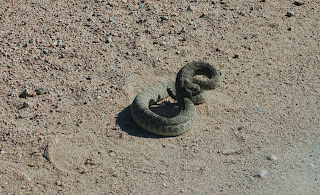
                Something rustled to his right. It sounded like a growl at first, but ended in something like a hiss. He knew coyotes hunted at night. He imagined snakes and spiders and monsters from nightmares he thought he had forgotten. 

Peter closed his eyes and started to weep. “I’m sorry, Daddy,” he whispered. “I’m so sorry.”

             From the opposite direction, he heard something else. 

“Peter!” This time it was loud and familiar. He opened his eyes to see a light shining toward him. “I’m here, Peter. It’s okay.”

                A moment later, his father consumed him in an embrace. Peter’s fear and shame and confusion evaporated. In that moment, nothing else in the world existed for Peter but his father’s love.

                That knowledge, that clarity, changed everything.

Tuesday, June 9, 2015

The Off Season?


My kids love softball and baseball, and we are now entering the heart of those seasons. Seasons which often coincide with fishing and spending time at the lake with family. We often have to choose one over the other. But as I watched my 9-year old pitch in his first game the other day, it struck me that baseball and softball are great sports and that many of the things that make them great have commonalities with hunting and spending time outdoors. 

It seems to me that whether we are trolling along the shores of Lake McConaughy or skirting the turkey woods or tossing a ball in the backyard, we are ultimately spending time together. We are building relationships. We are making memories. We are giving ourselves to each other because that is what love asks of us. 

I suppose I hunt because my father took the time to share one of his passions with me. He sacrificed hunting his own game so he could teach me to sit quietly, to see more clearly, and to listen with more focus. Believe me, that took a great deal of patience and time and I never did get as good at it as he was. Yet, he sacrificed his own success for the mere hope that I may have some of my own simply because love asked that of him.

I continue to hunt and fish and the memories my parents gave to me are as much a part of today as they were when we made them so long ago. I am creating new memories with my children. Memories of watching a first turkey strut toward our blind, of reeling in a late summer walleye, of just sitting quietly in the hopes that a deer may venture into the open, or of teaching them how to throw a ball better.

My kids love softball and baseball and because they do I now love those sports more than I ever have. So during this season, I trade one memory for another. It is a trade I gladly make because my kids want to experience the things that make softball and baseball great sports. And I want to see them experience those things. 

Even if they do not realize it, they are learning many similar lessons they learn in the outdoors. They learn it is okay to fail, and that failure is a great teacher. They make mistakes. They see their teammates make mistakes. They see coaches and umpires make mistakes. And then after those mistakes, they see that the game goes on. They learn the importance of perseverance.  They learn that others rely on them. They learn that they often need help. They learn there are rules, and, more importantly, ethics that must be followed. They get to experience the satisfaction of a game well played and the fruits of extra effort. Most of all, they develop relationships, and I am honored to be a part of that.  

My kids may not become professional ball players, or even play beyond the next few years, but for this brief moment in their lives they get to play the game with joy and passion. I pray they remember the beauty of it. 

And later this summer, when we are fishing on the lake or target shooting in preparation for fall, I will thank God for the children He has entrusted me with. I will thank Him for the opportunity to sacrifice some of the things I want for some of the things they want. And I will thank Him for the greatest sacrifice of all. 

Then I will try to teach my children to the best of my ability because love asks at least that much of me.